How much can we learn about a robot before putting it in the water—or on the road? CRANE sim is the simulation foundation of the Cross-Domain Robotics Autonomous Navigation Engine. Composable physics modules model vehicle dynamics, actuation, buoyancy, drag, wind, and currents across ground, surface, and underwater platforms. Configurable simulated sensors—including LiDAR, cameras, IMUs, and positioning systems—support testing navigation and localization under controlled conditions. Shared ROS interfaces connect simulated and physical hardware, allowing navigation components to be tested and baseline parameters tuned in Unity before transferring to a real vehicle. The project explores reusable autonomy across different vehicle configurations, with simulation-first validation intended to reduce deployment risk and repeated hardware iteration. This project advanced to the Texas Science & Engineering Fair (TXSEF).
Explore project Beyond what
we know.
The world is full of unanswered questions.
We’re learning to ask the next one—together.
It begins with a question
02 — A first discovery
Curiosity finds
a way.
A question can feel like a vast, empty landscape. Then something shifts. A conversation. An observation. A possibility you hadn’t seen before.
Matrix Fellows is a student-founded research society at Martin High School, built around that moment. We bring curious people together to turn a first idea into meaningful inquiry.
Trying something new is part of research: unfamiliar methods and imperfect first attempts reveal what matters, what fails, and what to investigate next.
03 — An ocean of possibility
Every answer.
Another horizon.
Our research starts small and looks further.
Three projects. Many more questions.
These projects are actively being iterated upon.
04 — Beneath the surface
The unknown
is an invitation.
Research asks us to stay with the difficult questions. To look closer when the answer isn’t obvious. To try again when an idea doesn’t hold.
You don’t need to have it all figured out. You need curiosity, a little courage, and people willing to go deeper with you.
05 — No discovery exists alone
One curious mind.
Infinite connections.
Ideas connect. Disciplines overlap. One person’s question becomes another person’s breakthrough. That is how knowledge moves forward. Together.
There’s a place for you hereThe people behind the invitation
Meet the officers.
Students building a place where ambitious questions can become shared work.

Liam Bray
Founder
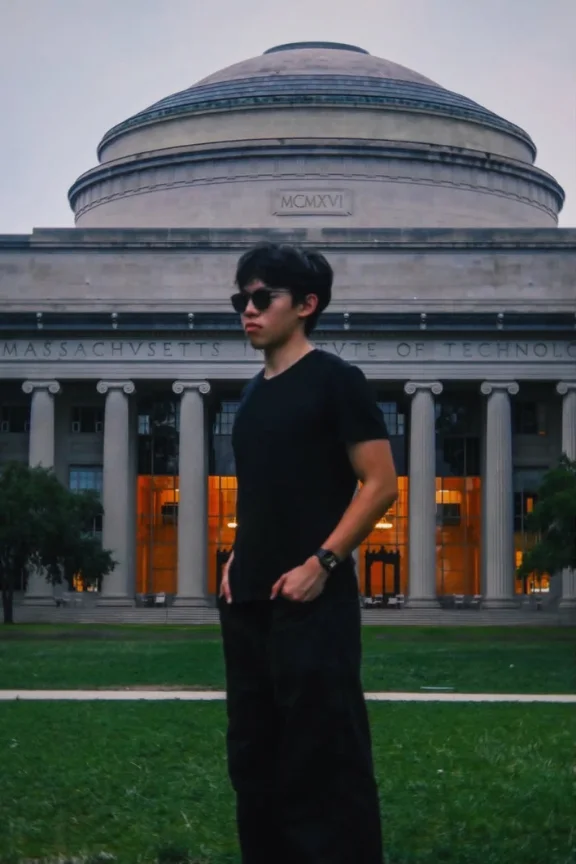
Nicholas Cheng
Co-Founder / VP
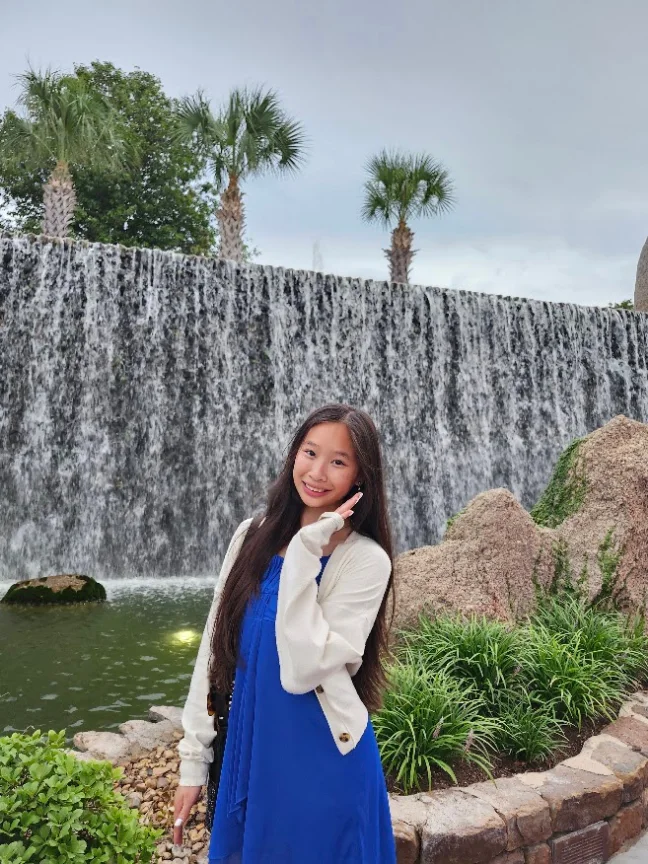
Alysia Bui
Secretary
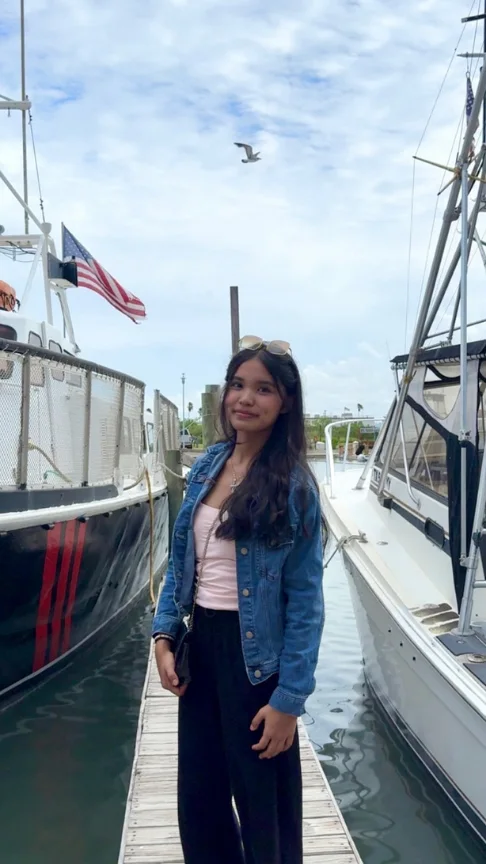
Nu Nu
Treasurer
0104
Your next chapter
Come curious.
Bring an idea, a question, or simply yourself.
Let’s find out what comes next.
Why we gather
A place to turn curiosity into momentum.
Gatherings connect students with practical next steps—finding ideas, choosing a route, forming teams, and moving thoughtful work forward together.
Gathering calendar
October 2026
Past gathering
From an ISEF interest to a regional-fair entry.
A working session on teams, the ISEF pathway, near-term deadlines, example projects, and starting a Fort Worth regional-fair registration.
- When
- During lunch
- Where
- Martin HS - Room 131 (Quinn)
What we covered
- How ISEF works, why students qualify through affiliated fairs, and where the Fort Worth Regional Science and Engineering Fair fits.
- A checkpoint for choosing individual or team ISEF work; students pursuing other competitions can use the same time to find collaborators.
- Upcoming fair, workshop, and submission deadlines—including other credible places an ISEF project may be shared when its rules and fit allow.
- Several real ISEF project examples, examined for how they turn a broad interest into a testable question rather than as templates to copy.
- An idea-starting exercise that identifies a problem, accessible evidence, likely constraint, and one-week feasibility test.
- For students with teams in place: a guided start on Fort Worth Regional Science and Engineering Fair registration, even if the final idea is still developing.
Resources
Room to grow
A little support.
A lot of possibility.
Compete on a bigger stage.
Prepare strong work for science fairs and competitions, then pursue recognition from local showcases to national awards.
Open the next door.
Build the experience and portfolio to pursue research internships and selective summer programs—and navigate the applications.
Put your interests to work.
Turn a genuine interest into applied, real-world experience through experiments, prototypes, personal projects, papers, and workshop submissions.
Find people who help you grow.
Meet collaborators and mentors, sharpen your questions, and keep moving when ambitious work becomes difficult.
Research guides
Make the next step concrete.
Short, practical field notes for finding a question, doing careful work, and explaining what you found.
Start · 14 min
Contact a research mentor
Start · 14 min
Find an idea worth pursuing
Design · 13 min
Shape a researchable question
Design · 15 min
Plan your first study
Communicate · 14 min
Build a strong science-fair poster
Communicate · 13 min
Present research clearly
Out there, waiting for you
Find your next opening.
Search specific poster, paper, workshop, challenge, publication, and research-program routes. Dates and eligibility stay tied to their sources.
Featured route 1 / 6
Research, humanities & creative work
Davidson Fellows Scholarship
Scholarships for significant original work. The next cycle is monitored; an exact deadline is not inferred from previous years. The 2027 application will open in the Fall of 2026. Exact deadline not yet announced on this source.
Who it’s for · Applicants must be 18 or younger as of the application deadline to be eligible.
Current status
Awaiting announcement · Check the detail page for verified dates and requirements.
Source checked Sep 23, 2026
Latest check unavailable · confirm with organizer
Science & engineering
Regeneron ISEF 2027
International science and engineering fair. The listed date is the event, not a local qualifying-fair submission deadline.
Who it’s for · Students qualify through an ISEF-affiliated fair. Local fair eligibility and deadlines vary; there is no universal direct student application.
Next useful checkpoint
ISEF begins
May 8, 2027
Source checked Sep 7, 2026
Latest check unavailable · confirm with organizer
Robotics
IROS 2026 Regular Paper
The archival main-paper route for original robotics research at IROS 2026. Submission has closed, but the route remains useful as a verified current-edition reference and future-cycle monitor.
Who it’s for · The reviewed call does not state a high-school policy. Authors need completed original research and an accepted paper must be presented in person.
Registration and travel are required if accepted; see the current registration table. · Completed original research, an archival manuscript, peer review, revision, and in-person presentation.
About this edition’s status
The 2026 paper deadline passed; the conference is scheduled for September 27–October 1, 2026.
Latest confirmed checkpoint
Conference begins
Sep 27, 2026
Source verification pending
Latest check unavailable · confirm with organizer
Machine learning & AI
NeurIPS
Conference on Neural Information Processing Systems. Session dates and main-track deadlines are tracked separately.
Who it’s for · Main-conference papers and individual workshops have different calls. Check each track and attendance requirements.
Latest confirmed checkpoint
Affinity Event Submission Deadline
Jun 28, 2026
Source checked Sep 22, 2026
Latest check unavailable · confirm with organizer
Science & engineering
Regeneron Science Talent Search
Research competition for high-school seniors. The application cutoff is tracked separately from finalist events.
Who it’s for · Research conducted during any year of high school is eligible for Regeneron STS.
About this edition’s status
The Regeneron STS 2027 application is now open
Next useful checkpoint
Application deadline
Nov 5, 2026
Source checked Sep 21, 2026
Latest check unavailable · confirm with organizer
Electrical engineering
ICASSP 2027 Regular Paper
The main archival ICASSP paper route for signal-processing research. The official call gives September 23 as a date-only deadline and does not publish a closing time or timezone.
Who it’s for · The reviewed call does not state a high-school policy. An accepted paper requires author registration and in-person presentation.
Registration and travel amounts remain unannounced or unverified. · Completed research, concise manuscript, peer review, final paper, and in-person presentation.
About this edition’s status
The official call lists a date-only September 23, 2026 deadline and May 16–21, 2027 event.
Next useful checkpoint
Acceptance notification
Jan 13, 2027
Source verification pending
Latest check unavailable · confirm with organizer
The next question starts with you